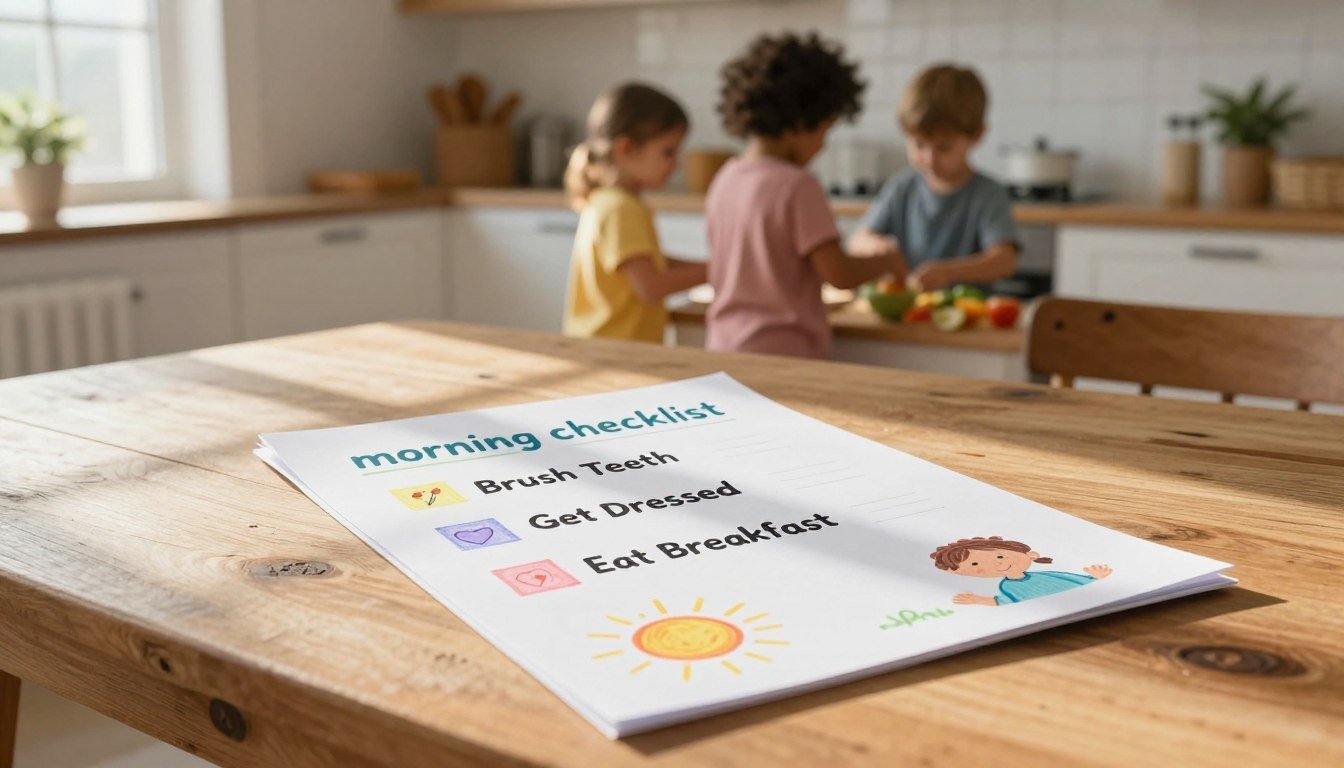
Quick answer: Calmer mornings come from a simple, predictable routine — not more nagging. Find the one step where mornings reliably break down, use a visual checklist so the chart does the reminding, prep what you can the night before, and give transition warnings and limited choices. Change one thing at a time and review after a week.
Part of the FamilyDecode Method: Decode → Identify → Plan → Practice → Review
Does every sunrise feel like a race against the clock? You might find yourself searching for missing shoes or repeating the same instructions over and over before breakfast. This daily struggle often comes from unclear expectations, not your child's behavior.
Creating a predictable morning routine for kids can change your household. By moving from reactive parenting to a structured system, you support your child's independence. This helps families have calm mornings without constant nagging.
When the chart carries the steps, kids need you less — and that builds real independence.
In this article, we dive into practical ways to make mornings easier. We'll talk about the benefits of visual schedules, preparing things the night before, and using transition warnings. Our aim is not to have perfect compliance. Instead, we want a smoother start to the day with less stress and more confidence.
Key Takeaways
Establish a predictable sequence to boost child independence.
Use visual aids to clarify expectations and reduce verbal reminders.
Prepare essential items the night before to save precious time.
Implement transition warnings to help children shift between tasks.
Focus on consistency to build long-term habits and reduce conflict.
Watch: building a calmer morning routine.
Why a Morning Routine for Kids Can Break Down
This is the same root behind why kids resist routines in general — usually a hidden bottleneck, not defiance.
Why does a simple kids morning routine often turn chaotic? Many families face daily frustration due to hidden issues, not lack of effort. By finding these problems, you can make mornings smoother.
How Rushing, Transitions, and Tiredness Create Stress
Children struggle to control their emotions when they're tired. Rushing to get ready for school or work makes them feel stressed. Transitions are hard for kids who have trouble with planning.
"Children are not giving you a hard time; they are having a hard time."
— Dr. Ross Greene
Why Unclear Expectations Lead to Repeated Reminders
Parents often repeat instructions because kids don't know what's expected. Without a clear plan, kids need constant reminders. This makes parents feel like they're the child's brain.
Good parenting tips say clear expectations stop nagging. When expectations are unclear, kids and parents get frustrated. A clear plan helps avoid constant reminders.
How Too Many Instructions Can Overwhelm Children
Too many tasks at once can overwhelm kids. Their brains can only handle so much. Break the morning into simple steps instead.
Keep instructions short and direct.
Focus on one task at a time to build confidence.
Use visual cues to reduce the need for verbal input.
Why Children Need Structure and Growing Independence
The goal of a kids morning routine is to find the right balance. Too much control can hold kids back, while too little leads to chaos. A predictable routine helps kids learn to be independent.
As kids grow, they should take on more responsibility. This requires patience and parenting tips that focus on building skills. By helping them with small tasks, you prepare them for the future.
A Family Case Study: Finding the Real Source of Morning Conflict
The Miller family thought their son was being defiant. But, the truth was simpler. Their morning routine for kids turned into a daily battle. This left everyone exhausted before the school bus even arrived.
They thought their seven-year-old was just being stubborn about getting dressed.
What the Family’s Typical School Morning Looked Like
The Millers started their day with hope. But things quickly went wrong. By 7:15 AM, the kitchen was busy, yet their son was in pajamas, staring at his cereal bowl.
His parents kept reminding him to get dressed. This led to more stalling and tears.
"We felt like we were constantly nagging, and he felt like he was constantly failing. It wasn't until we stopped and watched that we realized he wasn't trying to be difficult; he was just overwhelmed by the number of steps involved in getting ready."
The Miller Family
Identifying the Hardest Part of the Morning
To fix their school morning routine, the parents focused on one problem at a time. They watched to see when things went wrong. They found the issue wasn't the whole morning, but the transition from breakfast to getting dressed.
They realized the child struggled with putting on socks and shoes while feeling rushed. This changed how they approached the family routine. They stopped blaming the child and looked for a practical solution to the problem.
Separating Skill Gaps, Resistance, and Time-Pressure Problems
It's important to tell if a child refuses to do a task or lacks the skill. Sometimes, what looks like defiance is actually a hidden skill gap. Other times, the issue is the schedule is too tight for the child's pace.
Issue Type
Common Sign
Potential Solution
Skill Gap
Child struggles with buttons or laces
Practice the skill during non-busy times
Resistance
Child says "no" or ignores requests
Offer limited choices to build autonomy
Time Pressure
Child panics when the clock is watched
Add a 10-minute buffer to the schedule
Questions Parents Can Ask Before Changing the Routine
Before changing your school morning routine, ask a few questions. Does your child know what's expected? Is the task right for their age? Is there enough time for mistakes or slow starts?
Tracking Patterns Without Blaming the Child
Keep a neutral log of the morning for three days. Note the time, task, and child's reaction without judgment. This data helps see the morning routine for kids as a puzzle to solve, not a flaw to correct.
FamilyDecode: Decode, Plan, Practice, and Review
It’s the heart of the FamilyDecode Method: change one thing at a time and watch what shifts.
Creating calm mornings can feel like solving a puzzle. Many parents struggle because they focus on symptoms, not the root cause. By using a structured approach, you can make your family routine predictable and stress-free.
The FamilyDecode method is a cycle to regain control. It has four steps: Decode, Plan, Practice, and Review. This cycle helps you move from reactive to proactive parenting, supporting your child’s growth.
Decode the Behavior and Identify the Morning Bottleneck
Start by observing mornings without judgment. Find the moment when things usually go wrong. This is your morning bottleneck.
Ask if the issue is skill, transition, or too much pressure. Once you find the exact problem, you can start solving it.
Plan a Routine That Matches the Child’s Age and Abilities
After finding the bottleneck, plan a routine for your child’s age. A good plan must fit the time and your child’s abilities.
Break tasks into smaller steps.
Make the sequence logical and easy.
Adjust expectations based on your child’s age and independence.
Practice the Routine When Everyone Is Calm
Don’t try to teach a new routine in a busy morning. Practice during a weekend or quiet evening.
Role-playing helps children build confidence and muscle memory. When they know what to do, they succeed under pressure.
Review What Works and Adjust What Does Not
Even the best plans need adjustments. Regularly review your family routine to see if it works. If a step causes frustration, change it.
Using the FamilyDecode Cycle After Schedule Changes
Life changes, and your routine should too. Whether it’s a new school year or a change in sleep, the FamilyDecode cycle helps.
Just start the cycle again by decoding new challenges, planning, and practicing. This consistent review keeps mornings manageable, even with life changes.
How to Build a Simple Kids Morning Routine
Creating a good school morning routine means balancing important tasks with what's realistic. Simplifying it helps both you and your kids. A clear plan makes mornings smoother.
Choose the Essential Tasks for School Mornings
First, list the must-do steps to get ready for school. A good morning routine for kids includes waking up, dressing, eating, and hygiene. Keep it short to avoid morning stress.
Put Activities in a Consistent, Easy-to-Follow Order
Consistency is key. Doing things in the same order every day makes them automatic. A morning checklist helps your child see the order, so you don't have to remind them.
Estimate Realistic Time for Each Routine Step
Parents often guess how long tasks take, like putting on shoes or packing a backpack. Watch your child for a few days to see how long each task really takes. Adding a little extra time helps avoid morning rush.
Connect Each Task to a Clear Starting Cue
Children find it hard to switch tasks without knowing when. Use clear cues like a song, timer, or finishing breakfast to signal it's time to move on. These cues help your child focus without needing you to tell them.
Keeping the Routine Short Enough to Use Every Day
The best school morning routine is simple and works even on busy days. If it's too complicated, it won't stick when you're in a rush. Keep it simple and consistent to make mornings easier, not harder.
Visual Schedules and Morning Checklists That Reduce Reminders
Turning morning chaos into a smooth start often begins with making expectations clear. When kids have a clear plan for the day, they need less help from parents. This helps create a consistent kids morning routine that encourages teamwork, not resistance.
Designing a Visual Schedule for Younger Children
Young kids who can't read yet do best with pictures. Using icons or photos of them doing tasks helps them know what's expected. Visualizing the steps makes time feel more real and easy to handle.
Creating a Written Morning Checklist for Older Kids
As kids grow, so do their needs. A written morning checklist helps them feel more in control. Older kids like checking off tasks, which helps them manage their time better without constant help.
Using Pictures, Words, or Both
The best method depends on the child's age and what they like. You might use simple icons with short words for kids in between early childhood and school age. This mix keeps the morning checklist effective as your child learns to read better.
Sample Morning Checklist for a School Day
A clear order helps kids do tasks quickly. Here's a simple daily plan:
Get dressed for the day.
Eat a healthy breakfast.
Brush teeth and wash face.
Check backpack for homework and lunch.
Put on shoes and head to the door.
Where to Display the Schedule for Easy Access
Where you put the schedule is key. Place it where kids can see it easily, like the kitchen or near their bedroom door. When it's in a spot they can see, they're more likely to use it on their own.
Teaching Children to Check the Routine Independently
Getting kids to do things on their own takes time. Start by going through the routine together until they feel ready to do it alone. By pointing to the chart instead of giving reminders, you help your child take charge of their kids morning routine.
Age-Appropriate Morning Routine Examples
Not sure a step matches your child’s stage? Our behavior checklist helps you tell.
A good morning routine for kids changes as they grow. It's not just about their age. Look at their skills, reading level, and how well they can manage things. This way, you set goals that are right for them.
Morning Routine for Preschoolers
Parent Support for Dressing, Eating, and Hygiene
Young kids need help with things like buttoning shirts. You should help them out to keep things moving. Use simple steps that they can follow easily.
For example, pick out clothes the night before. Let them choose a little to keep things simple. Help them brush their teeth while they hold the brush. It's a great way to bond.
A calm morning isn't a quiet one — it's a predictable one, where everyone knows the next step.
Morning Routine for Elementary School Children
Tasks Children Can Begin Managing Independently
Elementary school kids can start following lists and schedules. It's time to help them do things on their own. A steady kids morning routine boosts their confidence.
Let them pack their backpacks and organize their school stuff. It helps them feel in charge of their day.
Morning Routine for Tweens
Adding Responsibility While Maintaining Accountability
Tweens can handle complex schedules but need clear rules. A kids morning routine at this age should focus on time and responsibility. You can guide them instead of doing everything for them.
Here's a table showing how tasks change as kids grow:
Task Category
Preschooler
Elementary
Tween
Dressing
Full assistance
Independent
Independent
Breakfast
Served by parent
Help prepare
Self-serve/Clean up
School Prep
Parent packs bag
Checklist usage
Full management
Hygiene
Supervised
Independent
Independent
Adjusting your morning routine for kids to their age helps a lot. It makes mornings easier and builds good habits. Remember, being consistent is key for everyone.
Night-Before Preparation for Calmer School Mornings
Calm mornings start the night before — a solid bedtime routine is half the battle.
Many parents find that a successful school morning routine starts long before the alarm clock rings. By shifting essential tasks to the evening, you remove the pressure of last-minute decision-making. This proactive approach is a cornerstone of creating calm mornings for everyone in the household.
Preparing Clothes, Backpacks, and School Supplies
Laying out clothes the night before eliminates the common struggle of finding matching socks or clean shirts. Encourage your children to pack their backpacks and organize necessary school supplies before they head to bed. When these items are ready by the door, you significantly reduce the chance of frantic searches during the morning rush.
Checking Homework, Lunches, and Special School Requirements
Reviewing homework folders and packing lunches in the evening prevents morning panic. If your child has a special project or a gym class, verify that all required gear is tucked into their bag. Consistency in these small habits ensures that nothing is forgotten when the bus arrives.
Setting a Consistent Bedtime and Morning Wake-Up Time
A predictable family routine relies heavily on adequate rest. Establishing a set bedtime helps children wake up feeling refreshed and ready to tackle their day. While every child has unique sleep needs, maintaining a steady schedule supports better emotional regulation throughout the morning.
Reducing Late-Night Decisions That Cause Morning Delays
Decision fatigue is a real challenge for both parents and children. By finalizing choices like outfits or breakfast options the night before, you preserve mental energy for the start of the day. This simple shift prevents the morning delays that often stem from indecision or forgotten tasks.
Creating a Family Reset Before the Next School Day
End your evening with a quick family reset to ensure everyone is on the same page. Take five minutes to review the calendar, confirm that bags are packed, and address any lingering questions. This final check provides peace of mind and sets a positive tone for a calm morning ahead.
Transitions, Limited Choices, and Parent Phrases That Help
Using the right words can make mornings easier for kids. Instead of just telling them what to do, guide them. This way, mornings can be more enjoyable for everyone.
Giving Transition Warnings Before It Is Time to Move On
It can be hard for kids to stop what they're doing to start something new. Giving them a little warning helps them get ready for the change.
Using Five-Minute and One-Minute Warnings
A five-minute warning is a gentle reminder that time is running out. Then, a one-minute warning tells them it's almost time to move on. This makes the transition smoother and less stressful.
A simple visual checklist moves the reminders from you to the wall.
Offering Limited Choices Without Negotiating Every Task
When kids feel they have no say in their day, it can lead to arguments. Giving them a few choices lets them feel in control, but within your rules.
Examples of Choices That Preserve the Routine
Instead of asking if they're ready to get dressed, ask them to choose. For example, "Do you want to wear your blue shirt or your green shirt today?" This lets them feel like they have a say while keeping the morning routine on track.
"The goal of parenting is not to control the child, but to provide the structure they need to learn self-regulation."
— Child Development Expert
Ready-to-Use Phrases for Common Morning Challenges
Having a few phrases ready can help you stay calm when mornings get tough. These phrases help you focus on getting the day started smoothly.
When a Child Refuses to Get Dressed
Say, "I see you are having a hard time choosing. Should we start with your socks or your pants first?" This makes the task easier to handle.
When a Child Gets Distracted
Use a simple reminder to get them back on track. Say, "I notice you are looking at your toys. Let’s finish putting on your shoes so we can head out the door."
When a Child Becomes Upset or Moves Slowly
It's okay to acknowledge their feelings without stopping everything. You could say, "I know you are feeling tired, but we need to finish breakfast now so we are on time for school."
Challenge
Ineffective Response
Effective Phrase
Refusal
"Get dressed right now!"
"Do you want to put on your shirt or pants first?"
Distraction
"Stop playing and listen!"
"I see you are playing; let's finish your shoes."
Slow Movement
"You are so slow today."
"We have five minutes left to finish our task."
Encouraging Independence Without Creating More Conflict
Start by understanding your child's current stage of development. Good parenting tips match tasks to what they can do. This way, you avoid morning power struggles.
Matching Responsibility to the Child’s Developmental Readiness
Children grow at their own pace. A preschooler might pick their socks, while an elementary student can handle their backpack. Observe your child closely to see their strengths and weaknesses.
Teaching One Routine Skill at a Time
Changing everything at once is frustrating. Start with one skill, like brushing teeth or putting on shoes. Mastering one task builds confidence for the next.
Using Prompts That Fade as Confidence Grows
At first, your child will need your help. But as they learn, you should step back. This lets them take control and builds motivation.
Replacing Repeated Reminders With Pointing and Checking
Constant reminders can feel like nagging. Use gestures or visual checklists instead. This shift in communication helps children feel less pressured.
Praising Effort, Follow-Through, and Problem-Solving
When children take the lead, praise their effort. Focus on the process, not just the outcome. This encourages them to keep solving problems.
Making Encouragement Specific and Genuine
Specific praise is more powerful than general "good job." Say something like, "I noticed you remembered to pack your lunch today." This genuine recognition boosts their self-esteem and independence.
Common Morning Routine Mistakes and School-Morning Fixes
Changing a stressful morning into a calm one is possible. It starts by avoiding common mistakes. Even the most dedicated parents can get stuck in a cycle of frustration. By spotting these pitfalls, you can make small changes for a smoother day.
Changing Too Many Parts of the Routine at Once
It's tempting to change everything at once when mornings are chaotic. But introducing too many new things can cause resistance and confusion. Start with small changes to support your child without overwhelming them.
Creating a Schedule That Leaves No Room for Delays
Many parents make a schedule that assumes everything will go perfectly. But forgetting to include buffer time for unexpected things can make mornings stressful. Always add a ten-minute cushion to handle minor delays without stress.
Expecting Independence Before Teaching the Skill
Encouraging self-sufficiency is a good parenting tip, but do it in stages. You can't expect a child to do a complex task if they don't know the steps. First, model the behavior, then guide them before expecting them to do it alone.
Using Consequences Instead of Clarifying the Plan
When mornings get tense, it's easy to use threats. But this often makes things worse. Instead, clarify the plan and make sure your child knows what's expected before the school bus arrives.
Adjusting for Illness, Neurodivergence, or Changing Family Schedules
Being flexible is key to a successful family routine. Whether it's a sick child, a neurodivergent learner, or a change in plans, your routine should be adaptable. On tough days, simplify the steps to keep things calm.
When to Seek Additional Support for Ongoing Morning Stress
If mornings are always stressful, despite trying different strategies, it's time to seek help. Persistent stress can point to deeper issues that need professional help. Consider talking to a pediatrician, child therapist, or school counselor for personalized parenting tips and advice.
Conclusion
Changing how you start your day is key. It's about moving from feeling stressed to planning ahead. By doing this, you can make mornings calm for everyone.
Begin by picking three important tasks to tackle this week. Use a morning checklist to keep these goals in sight for your family. Getting clothes and bags ready the night before helps avoid morning rush.
Start practicing these habits when it's easy. A good morning routine for kids is about being consistent and patient, not perfect. After a few days, check your plan to see what works best for your family.
You don't have to go through this alone. Look into FamilyDecode routine planners and free resources. They offer the support you need to build independence and peace in your home.
Frequently asked questions
Why does our morning routine for kids often lead to conflict and stress?
Mornings pack demands, transitions and time pressure into a short window when kids are still waking up. Conflict usually isn't defiance — it's an overloaded routine with a hidden bottleneck (often a transition, a choice, or a step that's too big). Find that one spot and the whole morning eases.
How can I use a morning checklist to improve our school morning routine?
A visual checklist moves the reminders from you to the wall. List three to five steps with simple pictures, let your child tick off each one, and point to the chart instead of repeating instructions. It builds independence and cuts the nagging.
What is the FamilyDecode method for handling morning bottlenecks?
Decode what actually stalls the morning, Plan one small change, Practice it consistently for a week, then Review what shifted. You fix one bottleneck at a time rather than overhauling everything at once.
How does night-before preparation help achieve a calmer morning?
Doing tomorrow's decisions tonight — clothes out, bags packed, breakfast chosen — removes friction from the moment everyone's tired and rushed. A calm morning usually starts the evening before.
What are transition warnings, and how do they help with a kids morning routine?
A transition warning is a short heads-up before a change: “two more minutes, then shoes.” It gives a child's brain time to shift gears, which prevents the meltdown that comes from being pulled abruptly out of one activity into another.
How do I encourage my child to be more independent during the school morning routine?
Give your child ownership of steps they can manage, use a visual chart so they don't need you for every reminder, and offer limited choices such as “this shirt or that one?” Praise the effort, and resist doing it for them to save time — that only delays independence.
What should I do if my child's morning routine for kids is not working?
Step back and observe for a few days to find the real bottleneck, then change one thing at a time. If mornings stay hard despite a simple, consistent routine, look at sleep, timing and whether the steps match your child's age.
Cut-out picture cards so pre-readers can follow the routine themselves.
✓ Check your inbox — your printable is on its way.
About the author
Mohamed Lachkar is the Founder & Editor of FamilyDecode. He develops practical family guides, planning tools and resources designed to turn recurring family challenges into clearer, repeatable systems.